


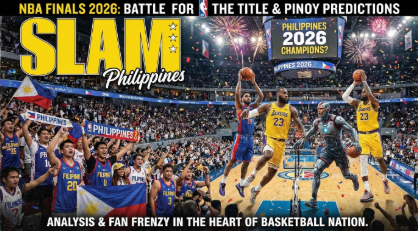
The Finals always land differently. It’s not just “two teams left.” It’s two teams that survived four rounds of scouting, adjustments, and the kind of fatigue that shows up as one late rotation and a wide-open corner three. In 2026, Finals talk is also more digital than ever. Fans don’t only argue about who has the best star. They compare probabilities, track lineup data, screenshot odds swings, and treat every timeout as a mini coaching exam.
Championship predictions usually start with a simple question: which team can keep its identity when the opponent knows every set? After that, everything becomes specific: how the stars get their points, what the defenses are willing to concede, and whether the fourth-quarter offense is stable or just vibes. The Finals are where “good” isn’t enough; clean execution wins.
The contender blueprint: what usually survives four rounds
By the time a team reaches June, the profile is rarely random. The most common Finals-ready builds in 2026 look familiar:
- Two-way wings plus rim protection: switchable defense, reliable half-court offense, and fewer weak links to hunt.
- Elite creation with spacing: a primary scorer who bends coverage and shooters who punish help.
- Depth that still matters: not 12 deep, but 8–9 deep with a bench that can survive non-star minutes.
Fans tend to judge contenders by “travel skills.” Defense travels, rebounding travels, shot quality travels. If a team needs a hot shooting night just to look normal, predictions get cautious fast.
Superstar matchups: it’s less “who’s better” and more “who’s controllable”
Finals series are often decided by what a defense can force. The star might still score, but the question becomes: how hard are those points, and who else gets pulled into the scoring load?
Common “star matchup” themes that dominate Finals debates:
- Can the defense make the star a passer early, not late?
- Does the star keep efficiency when the paint is crowded and the whistle tightens?
- Can the second star punish single coverage, or does everything collapse into one creator?
Fans also watch how stars spend energy. A star who has to carry the offense and chase the opponent’s best scorer can look great in Game 1, then noticeably slower by Game 4.
Defensive schemes that show up every Finals year
Even casual viewers end up using scheme language in 2026, mostly because clips travel fast and everyone has seen the same breakdown video by lunch.
The schemes that get the most attention:
- Switching: great for removing easy actions, risky if one defender becomes a mismatch target.
- Drop coverage: protects the rim, invites pull-up threes if the guard is in rhythm.
- Hedge-and-recover or blitzing: forces the ball out of a star’s hands, tests the opponent’s secondary playmaking.
- Zone looks in short bursts: not a lifestyle, more a “break the rhythm” tool.
A Finals defense is basically a negotiation. It can’t take away everything, so it chooses what to live with and tries to make the opponent uncomfortable doing it.
Late-game execution: why the last six minutes feel like a different sport
Fans who predict Finals outcomes usually circle one thing: fourth-quarter offense. That’s where great teams stop running sets “because they exist” and start running sets “because they work against this opponent.”
The late-game checklist is simple:
- Does the team generate a good shot without needing a bailout whistle?
- Can it inbound cleanly under pressure?
- Does it have a stable counter when the first option gets blown up?
- Is the defensive rebounding secure when stops finally happen?
A small detail, repeated, becomes destiny. One team gets a clean look every clutch possession. The other team gets a tough pull-up over a contest. The series score starts to reflect that difference very quickly.
The odds screenshot economy during the Finals
During a championship series, the feed moves fast: one clip, one injury update, one “he’s not coming back” rumor, and suddenly the conversation changes tone. In that environment, checking NBA betting becomes a practical way to keep predictions grounded in what the market is signaling. Fans compare game lines to earlier in the day, then connect the movement to news about minutes limits, matchup tweaks, or who looked gassed in the previous fourth quarter. The most common habit is to treat odds changes as a community prompt: people post the number, then everyone explains their theory about why it shifted. That turns Finals talk into a running, shared analysis instead of a single hot take.
Why MLBB debate habits transfer surprisingly well
Finals season doesn’t pause other competitions, and a lot of fans keep the same “analysis muscle” across categories. Conversations that jump to an MLBB betting site Philippines feel natural because series logic is series logic: adjustments, momentum swings, and the pressure of one bad decision. Draft advantages in MLBB get discussed the way defensive coverage choices get discussed in the NBA, only with different terms and faster pacing. In both worlds, people track form, look for repeatable edges, and argue about who adapts better between games. That cross-over keeps the Finals chatter lively without turning it into noise.
Fan prediction patterns that show up every year
By the Finals, predictions usually split into a few recognizable camps:
- “Defense-first” predictions: the team that can guard without fouling wins.
- “Shot quality” predictions: the team creating cleaner threes and layups wins.
- “Clutch star” predictions: the team with the calmer closer wins.
- “Bench survival” predictions: the team that doesn’t collapse in non-star minutes wins.
The best predictions combine these camps. A Finals winner usually checks at least two boxes, not one.
The quick entertainment lane between games
Finals schedules create gaps, and those gaps become routine time: waiting for Game 3, killing time before a late tip, or just keeping the hands busy while highlights loop. A short session on an online casino often fits that space because it’s fast and self-contained. The appeal is the format: quick rounds, clear outcomes, and zero need to “catch up” on context. Many fans treat it the way they treat a snack run during halftime: small, optional, and easy to stop when the main event returns. It’s entertainment that matches the Finals mood without pretending to replace the Finals.
A clean way to predict the 2026 champion without overcomplicating it
A solid Finals prediction in 2026 usually comes down to five questions:
- Which team can score efficiently when the opponent loads up?
- Which team can defend without giving away free throws?
- Who wins the rebound battle when shots finally miss?
- Which coach finds counters faster after losses?
- Whose late-game offense produces cleaner looks?
Answering those honestly beats guessing based on “who looks hungrier,” every time.